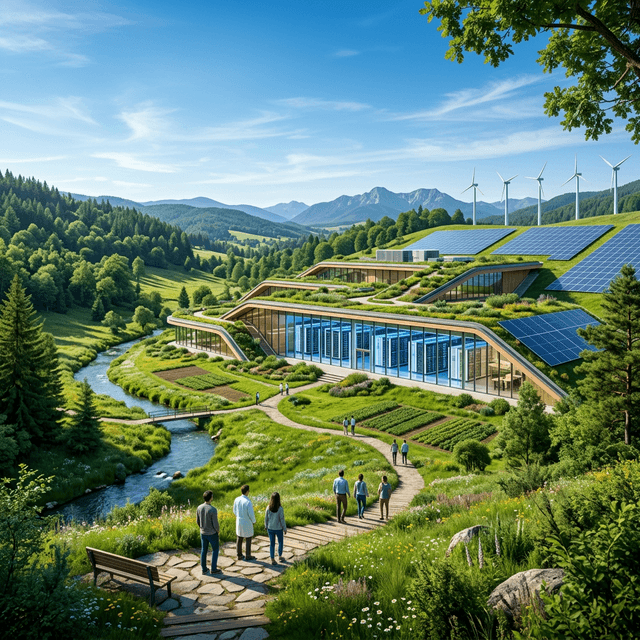
Introduction: The "AI Power Crisis" of 2026 is real. Data center energy consumption has reached an all-time high, prompting the 2026 EU Data Center Directive and similar mandates in the US. For CIOs, "efficiency" is no longer just about speed; it's about carbon output.
Facts About the 2026 Energy Bottleneck
The demand for H100/H200 successor GPUs has strained the global power grid. In tech hubs like London and Dublin, data centers now account for nearly 10% of total electrical demand.
Carbon-Aware Scheduling: 20% of global compute load is now automatically shifted to regions where renewable energy (wind/solar) is at its peak. The Rise of ARM-based Clouds: In 2026, 60% of new AI inference workloads have migrated to energy-efficient ARM instances like AWS Graviton4 and Azure Cobalt 100. Liquid Cooling at Scale: Over 40% of tier-1 data centers have replaced air cooling with liquid-to-chip immersion to handle the 1000W+ TPD of modern AI chips.
Implementing Sustainable Architecture in 2026
1. Strategic Workload Migration Leading architects are using AI to predict when local grids will be "greenest" and scheduling non-latency-sensitive training jobs to run during those hours.
2. Edge-Core Synergy By pushing 30% of inference to the "Edge" (closer to the user), companies are reducing the massive energy waste associated with long-distance data round-trips.
3. The Circular Compute Economy In 2026, heat-recycling is the new gold. Several Nordic data centers are now "selling" their excess chip heat to local cities for municipal heating, offsetting 15% of their operational costs.
The Critical Takeaway
By 2026, a "Green Cloud Portfolio" isn't just for CSR reports—it's a requirement for regulatory compliance and lower OPEX.
Loved this insight? Subscribe for more.
Join the inner circle of tech executives and senior engineers. Get our best architectural deep-dives delivered straight to your inbox.
Stay Ahead of the Curve
Join 2,000+ tech leaders. We verify every email to ensure only real insights reach real people.